


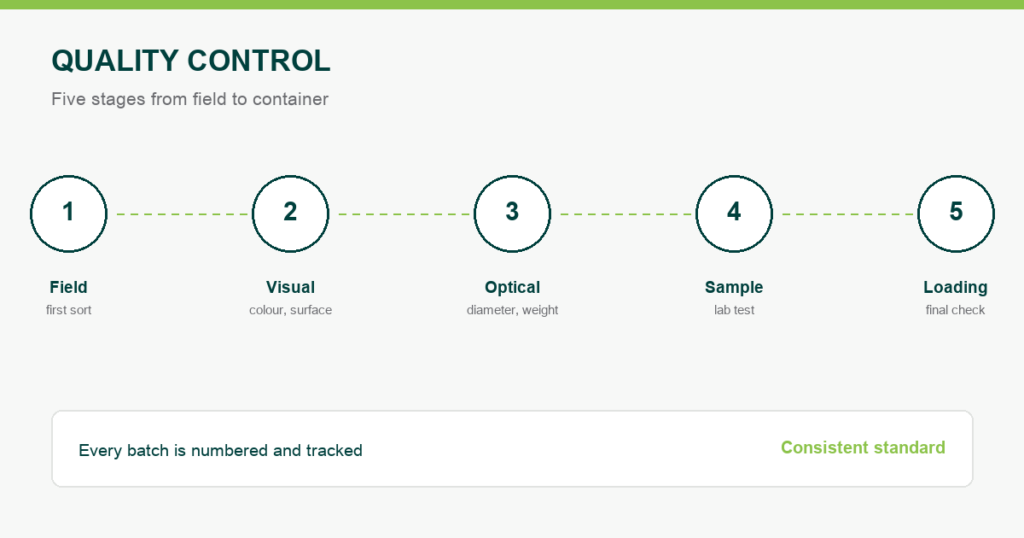
Quality control in Antalya’s fresh produce export isn’t a single check after harvest to see whether the crop is good or bad. It’s a series of checks applied at several distinct points between the field and the container, each one answering a different question.
The first sort happens in the field
Quality control starts at harvest. The picker sets aside anything off the right ripeness stage, damaged or diseased before it goes in the case. A mistake at this stage affects everything downstream — poor produce entering the facility can drag down the quality of good produce around it.
Sorting at the facility: eyes and machines together
Produce arriving at the packing house first goes through visual inspection; experienced staff pull out anything with the wrong colour, surface defects or an irregular shape. Optical sorters take over from there — camera systems classify the crop automatically by diameter, weight and colour intensity.
The human eye still catches texture and surface flaws better than a machine; a machine is more consistent than a hand on diameter and weight. Used together, the error rate drops.
Size grading: the same size in the same box
Size grading keeps the produce in a case close in size and weight. This isn’t just about appearance: in cooling and cooking, different sizes respond at different speeds, which shows up as an inconsistent experience at the buyer’s end.
Every crop has its own grading range, and that range can shift with the buyer’s market — Northern European retail wants a narrow band, wholesale allows a wider one.
Sampling and batch tracking
Samples from every batch go to the lab: residue analysis, brix (sugar) measurement, and for some crops a firmness test. Each sample is matched to a batch number, so if something goes wrong, that record shows exactly which batch was affected.
The final check before loading
Right before loading into the container or truck, one last visual check is made. Temperature is measured at this point too; if the crop is outside the target range, loading is held back. The temperature log goes with the shipping documents and can be checked at the buyer’s end.
What quality control delivers: fewer complaints, consistent supply
The real payoff of systematic quality control isn’t in a single shipment — it shows over time. A buyer who knows every batch meets the same standard is far more likely to keep working with that supplier long-term.
At Hatipoğlu Tarım, every batch goes through these steps. Review our quality system, or get in touch about the grading standard your market needs.
