


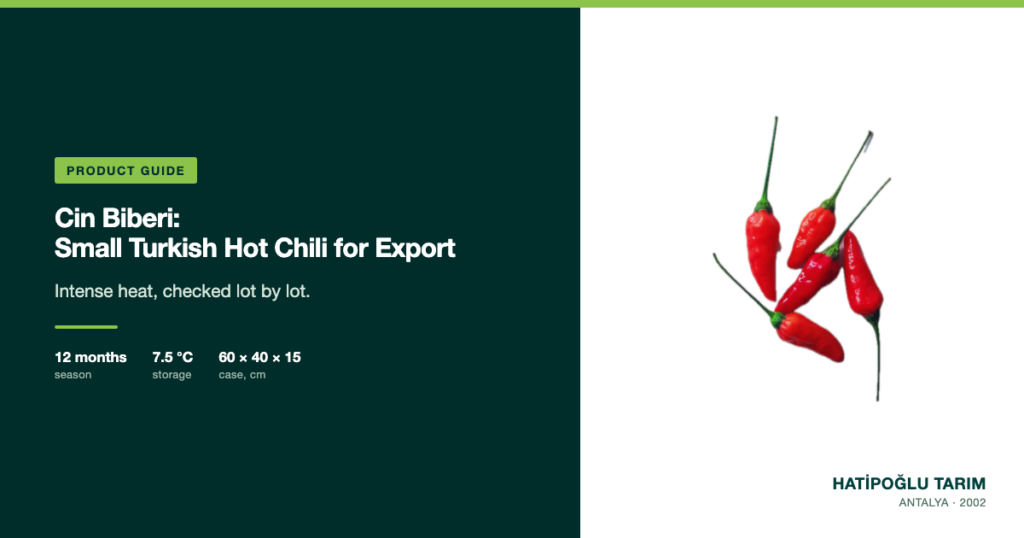
Cin biberi is a small-fruited pepper variety with a glossy skin and intense heat. In Turkey it is best known as a pickling pepper, but it also finds buyers fresh in markets that like heat. The fruit is only a few centimetres long, thin and pointed: a small Turkish hot chili. This guide covers the variety’s characteristics, its heat and the conditions for export. Hatipoğlu Tarım is a fresh pepper exporter based in Antalya, Turkey, and ships Cin biberi all year round; what follows reflects the criteria applied every day in Turkish pepper export.
Is it hot?
Yes, intensely so. Cin biberi is not classed with green table peppers such as Sivri and Charleston; it is one of the sharpest members of the hot pepper family. Because the fruit is small, it goes whole into a dish or a pickling jar and releases its heat slowly.
The substance that produces the heat is capsaicin, and its amount depends on three things: variety, growing conditions and maturity. Peppers grown in a hot, dry spell are hotter, so a difference can be seen between the summer and winter crop of the same variety. How the heat scale works is explained in our article on Turkish hot peppers and the Scoville scale.
Where it is used
- Pickling: the small, whole fruit sits neatly in a jar; this is the most common use.
- Fresh use: to add heat to dishes, sauces and mezze.
- Garnish: the glossy red and green fruit is used in plate presentation.
For a processor the deciding criterion is uniformity of size, because both the jar and the filling line need fruit of the same size.
Selection criteria
Hatipoğlu Tarım selects its Cin biberi for colour, soundness, freshness and uniformity of size:
- Size uniformity: the fruit within a carton must be of similar size.
- Colour: glossy and uniform. Green and red fruit are prepared in separate lots.
- Soundness: the fruit must be firm and crisp, with no shrivelling of the skin.
- Stem: green and attached to the fruit. A fruit that has lost its stem loses water at that point and begins to decay.
Sorting and lot control
Cin biberi is a small and delicate product. After harvest it is sorted with care: bruised and cracked fruit and fruit without stems are removed from the lot. In a small-fruited product, a single rotten fruit spreads quickly to its neighbours inside the carton; that is the real purpose of sorting.
Control is carried out lot by lot. For every lot, the plot and the day of picking are known. This record makes it possible both to predict shelf life and, in the event of a complaint, to trace the product back.
Hot varieties are kept apart from sweet varieties in the growing area. Since heat cannot be seen from the outside, this is the only way to prevent mixing.
Storage and shipping
Peppers achieve their longest shelf life at 7.5 °C and a relative humidity above 95%. Hot peppers tolerate chilling slightly better than bell peppers; they can be held at 5 °C for at least two weeks without visible damage. Over longer periods, chilling injury first appears as darkening of the seeds.
In a small-fruited product the surface area is large relative to the volume, so water loss is fast. High humidity and rapid cooling after harvest keep the glossy appearance all the way to the shelf. A pepper that keeps its marketable quality keeps its heat as well.
Season, packing and volume
Cin biberi is supplied twelve months a year and packed in 60 × 40 × 15 cm cartons. The product is prepared to the volume required; when processors notify their total seasonal volume and weekly delivery plan in advance, production can be reserved accordingly.
Residue control on peppers bound for Europe is strict. The subject is covered in detail in our MRL article.
Cin biberi export: from harvest to loading
Exporting Cin biberi from Turkey runs in six steps: harvest, same-day cooling, grading, packing, cold storage and dispatch by refrigerated truck. At Hatipoğlu Tarım all of these are handled in house, in the company’s own facilities. When export-grade peppers are allocated, the buyer’s market, sales channel and transit time are considered together, and every lot bound for Europe is also analysed for residues.
As a Turkish pepper exporter we need six details to quote: variety, size or calibre, packaging, weekly volume, delivery week and destination country. With these in hand, we prepare a loading plan and a quotation.
Hatipoğlu Tarım has exported fresh fruit and vegetables from Antalya since 2002. Under the FİNİKE brand it ships 128 product lines to 42 countries, with harvest, grading, cold storage and dispatch handled in house across five facilities in Serik, Kepez, Mavikent, Yenişehir and Alaşehir.
Tell us the colour, size and weekly volume for your Cin biberi programme, and we will prepare a sample and a price.
