


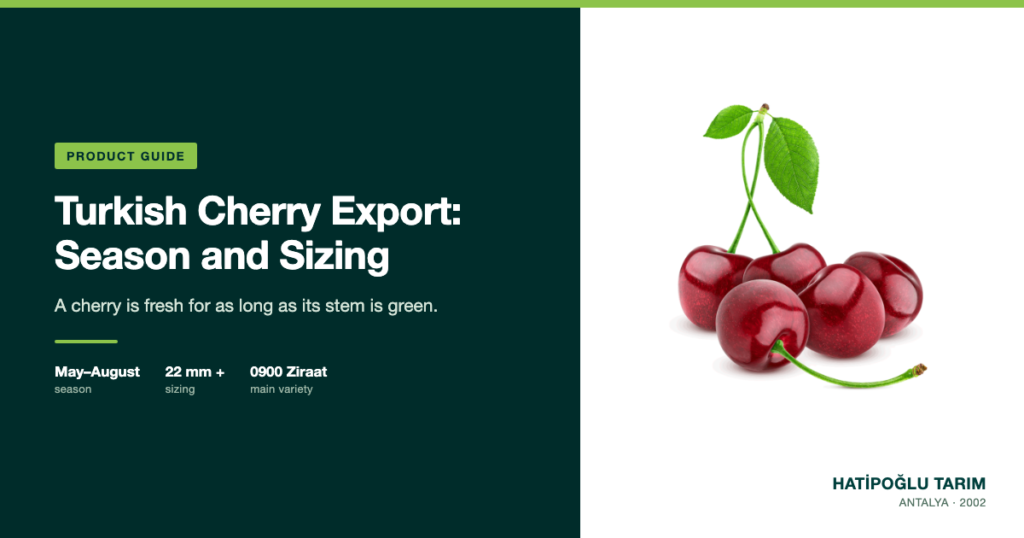
Turkish cherries for importers: the 0900 Ziraat variety, May–August season, sizing from 22 mm, same-day hydrocooling, storage at 0 °C and arrival checks.
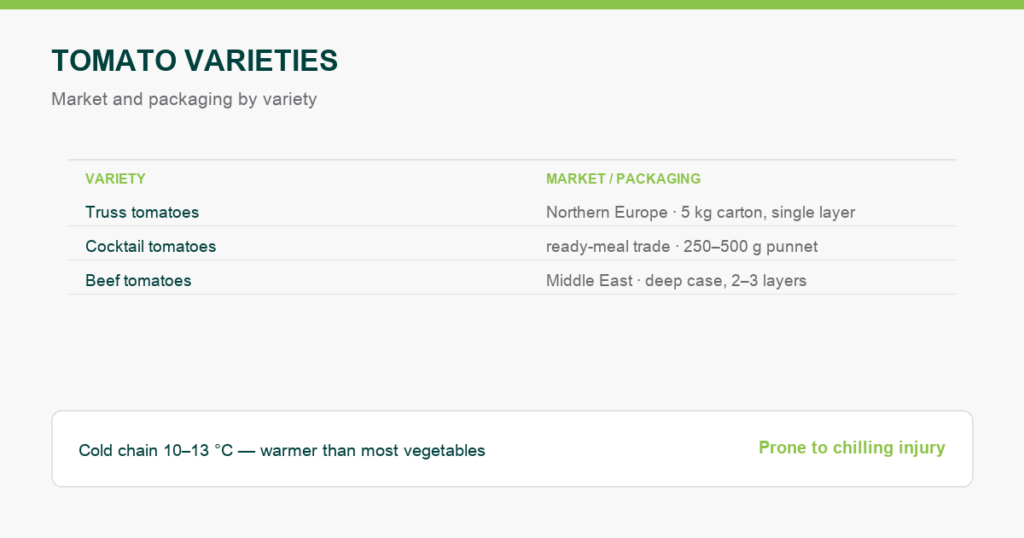 ArticlesAugust 20, 2026·2 min readTomato Varieties and Size Grading in Antalya’s Vegetable ExportWhich markets take truss, cocktail and beef tomatoes? How size grading works, why ripeness stage depends on shipping time, and what makes the tomato cold chain different.
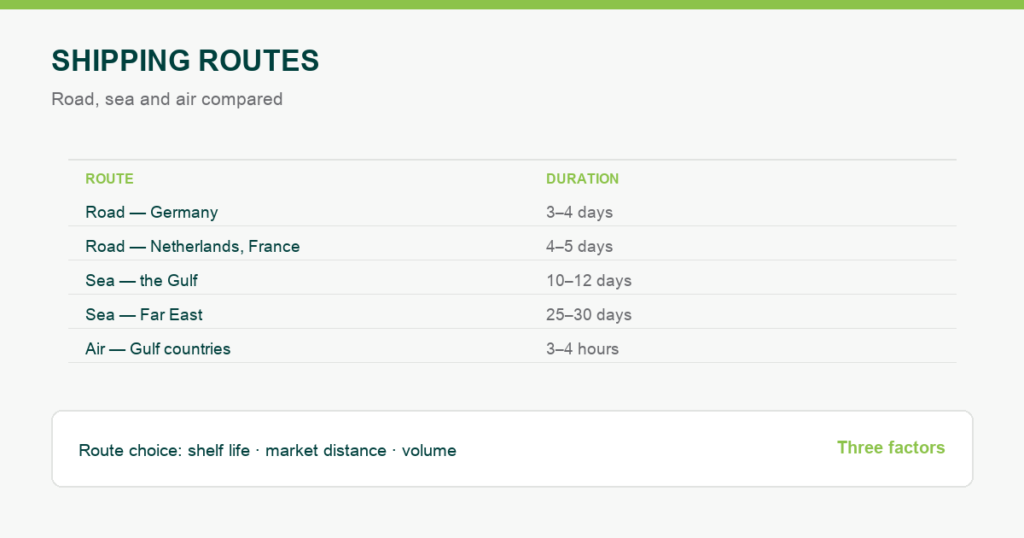 ArticlesAugust 20, 2026·2 min readShipping Routes in Fresh Produce ExportHow shipments from Antalya to Europe, the Gulf and the Far East are planned. Road versus sea versus air, customs checks, and the three factors that decide the route.
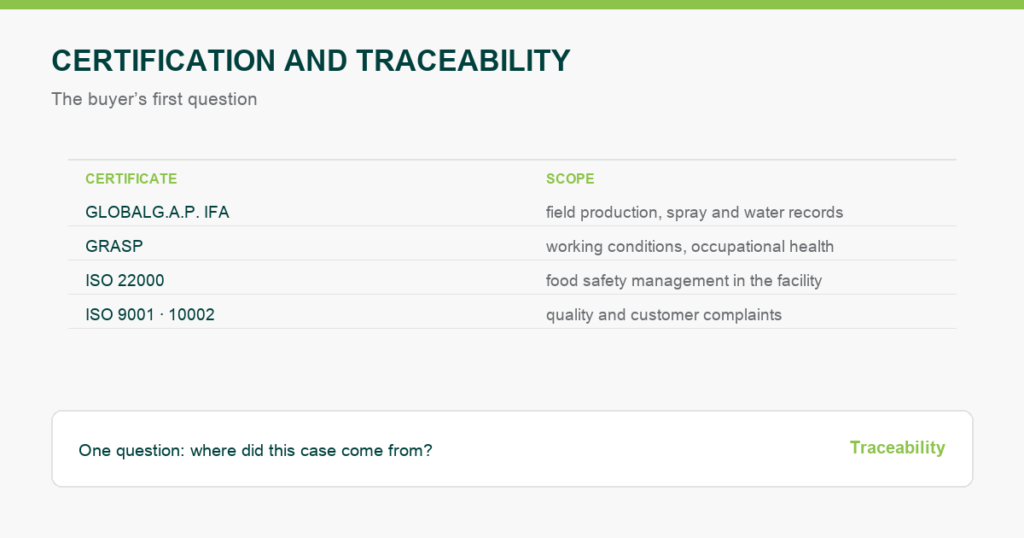 ArticlesAugust 20, 2026·2 min readCertification and Traceability in Antalya’s Fresh Produce ExportWhat GLOBALG.A.P. IFA, GRASP, ISO 22000 and ISO 9001 actually cover, what an auditor looks at, and how traceability limits the scope of a recall.
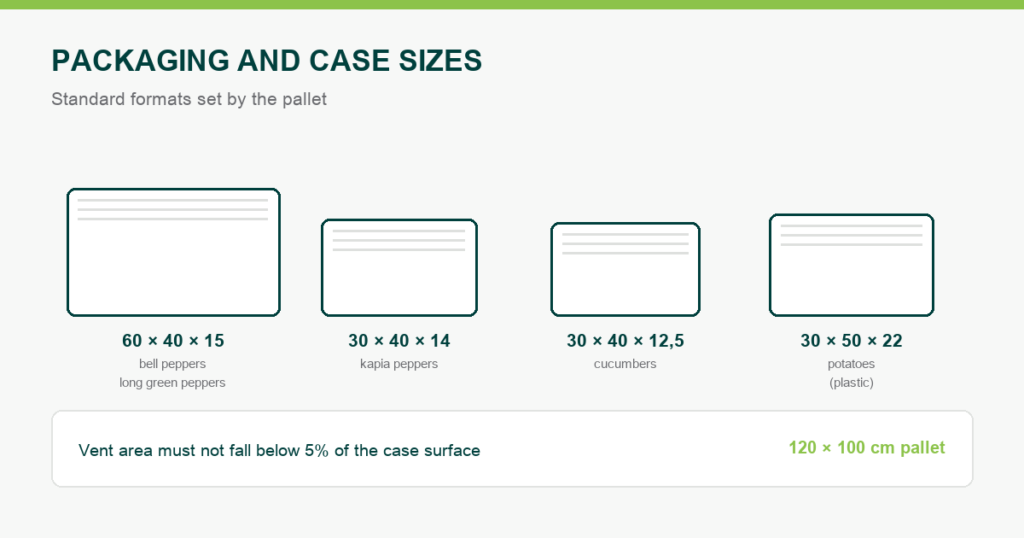 ArticlesAugust 20, 2026·2 min readPackaging and Case Sizes in Antalya’s Fresh Produce ExportCase sizes in fresh produce export follow the pallet. The 60×40×15 and 30×40×14 formats, carton versus plastic, and what the vent holes actually do.
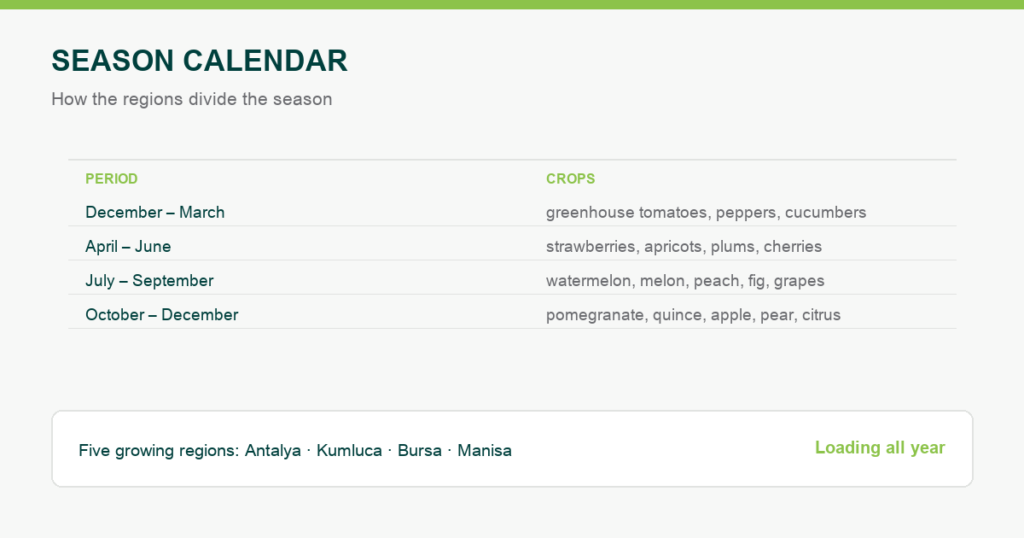 ArticlesAugust 20, 2026·2 min readTürkiye’s Fresh Produce Season CalendarHow Antalya, Bursa and Manisa divide the season between them. A month-by-month calendar by crop group, the quality gap between the start and end of a season, and what it means for shipment planning.
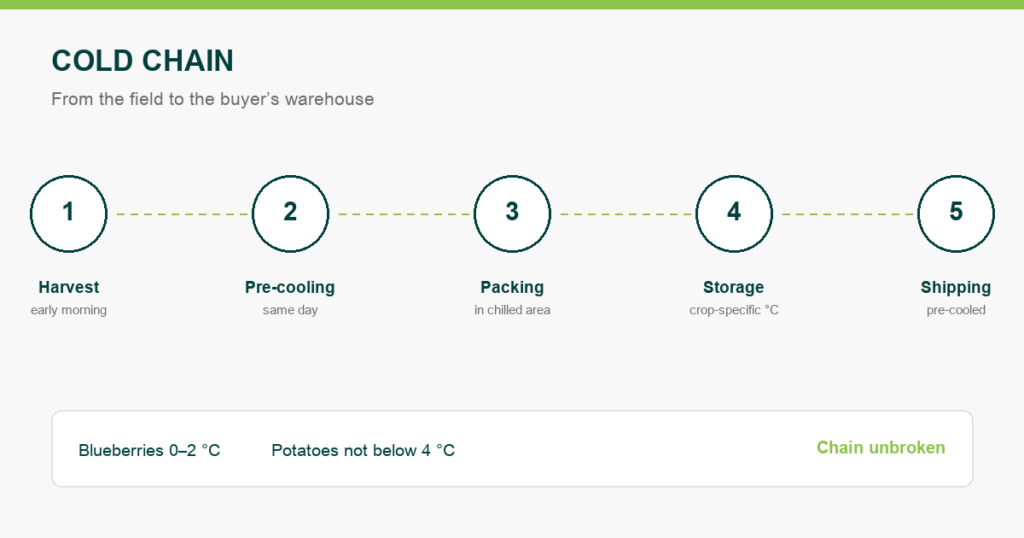 ArticlesAugust 20, 2026·2 min readThe Cold Chain in Antalya’s Fresh Produce ExportThe cold chain starts in the field and ends in the buyer’s warehouse. Post-harvest cooling, temperature ranges by crop, the points where the chain breaks, and the role of airflow.
Category Archives: Articles
17
Sep
Sep
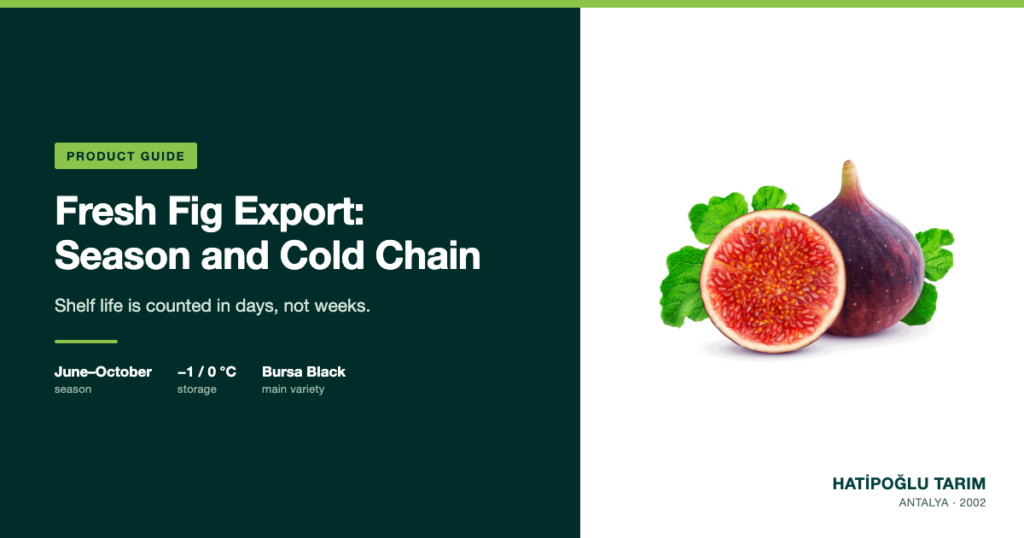
Turkish fresh figs for importers: the Bursa Black variety, June–October season, twice-daily picking, storage at 0 °C, single-layer packs and key defects.

24
Aug
Aug
How EU pesticide MRLs are set, which country’s limit applies, when to test, what a RASFF notification triggers and which documents buyers ask for.
24
Aug
Aug
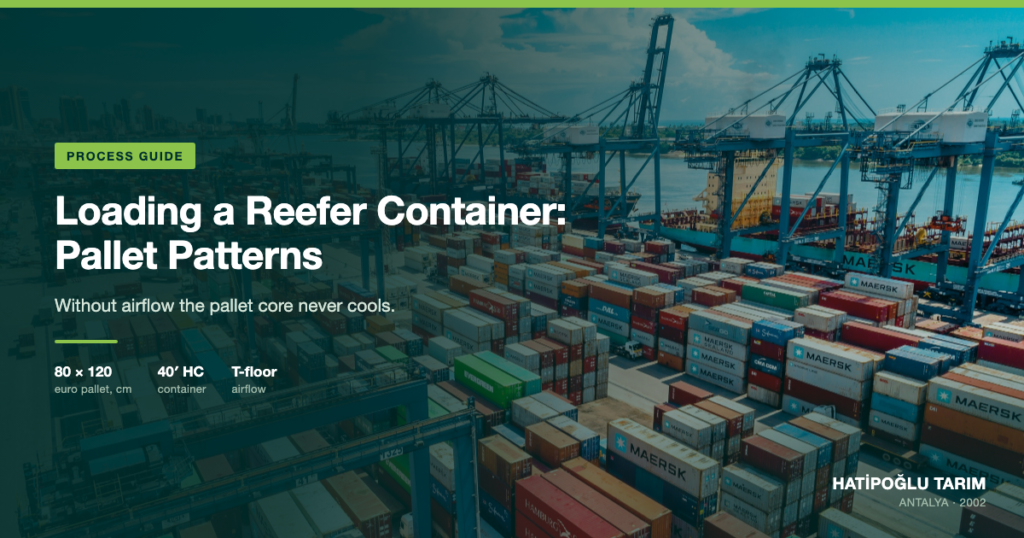
How reefer container loading and pallet patterns protect fresh produce: airflow, stack height, securing, pre-cooling and the load records buyers ask for.
24
Aug
Aug
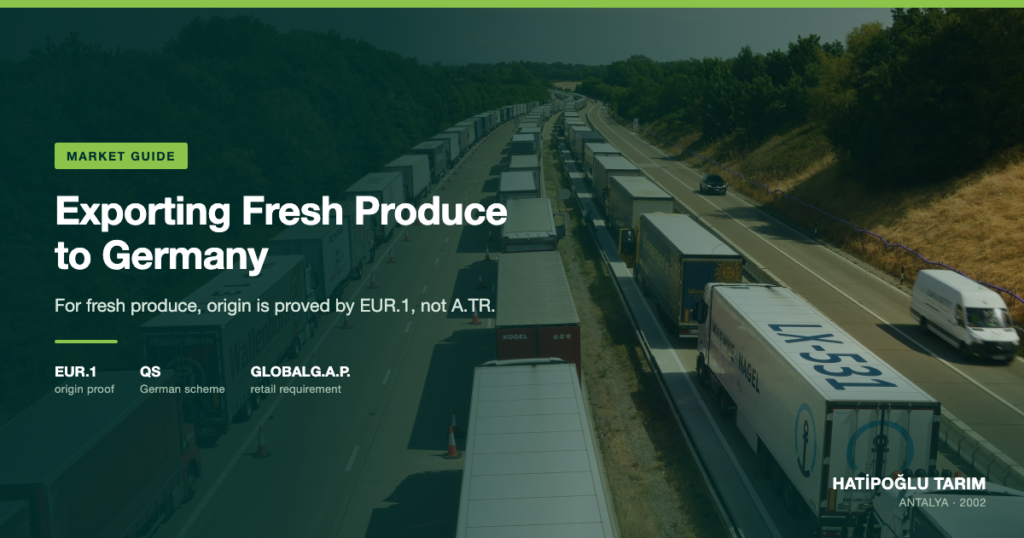
What German buyers expect from a fresh fruit and vegetable supplier: QS, residue control, labelling, customs papers and transit times.

24
Aug
Aug
The fresh produce export certificates required by European buyers, what each one guarantees, and how a buyer verifies the numbers.
24
Aug
Aug
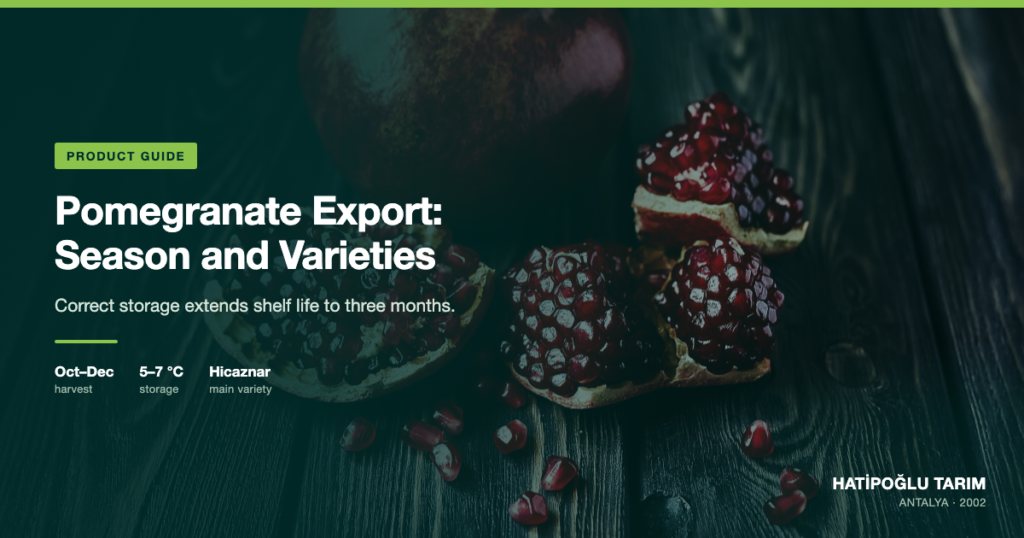
A Turkish pomegranate exporter’s guide to Hicaznar and other varieties: October to mid-December harvest, supply from store to late March, 5–7 °C storage.
24
Aug
Aug
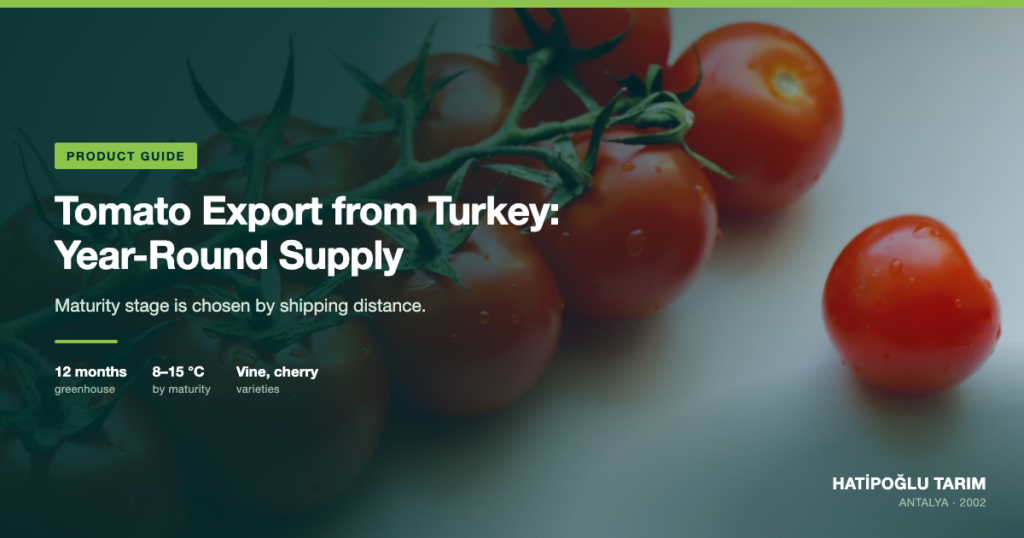
A Turkish tomato exporter’s guide to vine, cherry, beef and pink varieties, harvest maturity, 30 × 40 × 14 cm packing, shipping temperatures and ordering.
24
Aug
Aug
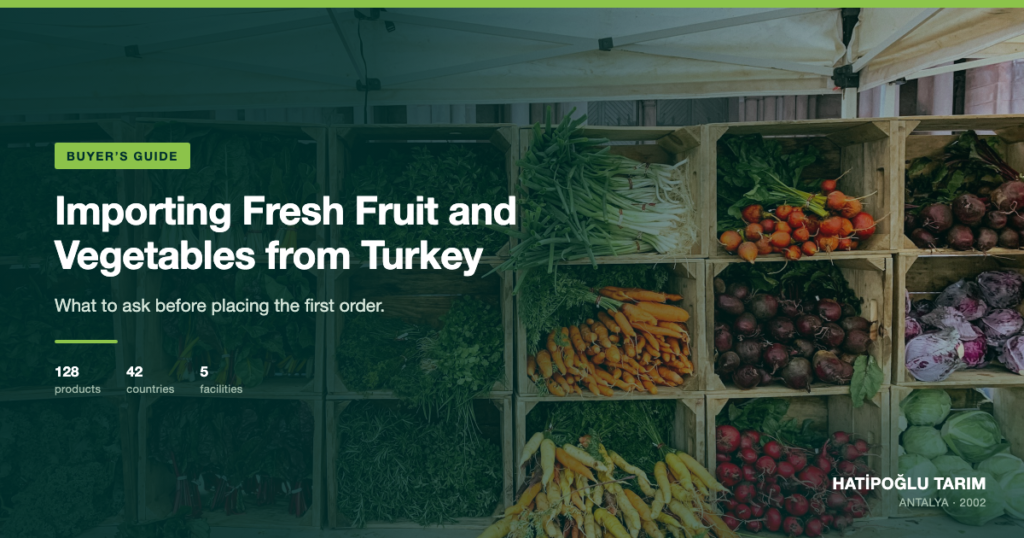
How to choose a fresh fruit and vegetable exporter in Turkey: certification, residues, packing, cold chain, incoterms and programme buying.
24
Aug
Aug
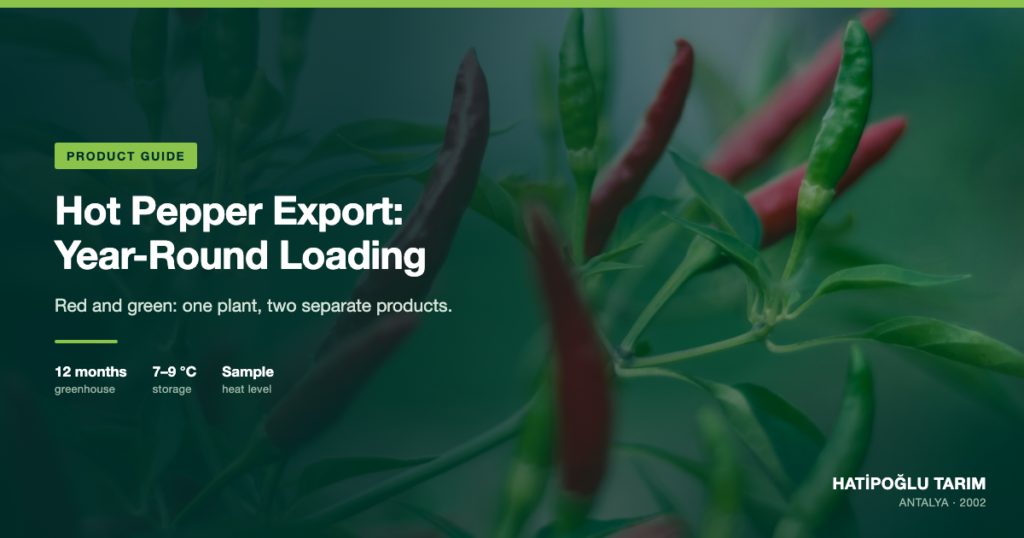
Red and green hot peppers load twelve months a year under protected cultivation. Sizing, heat level, 7–9 °C storage and packing.